


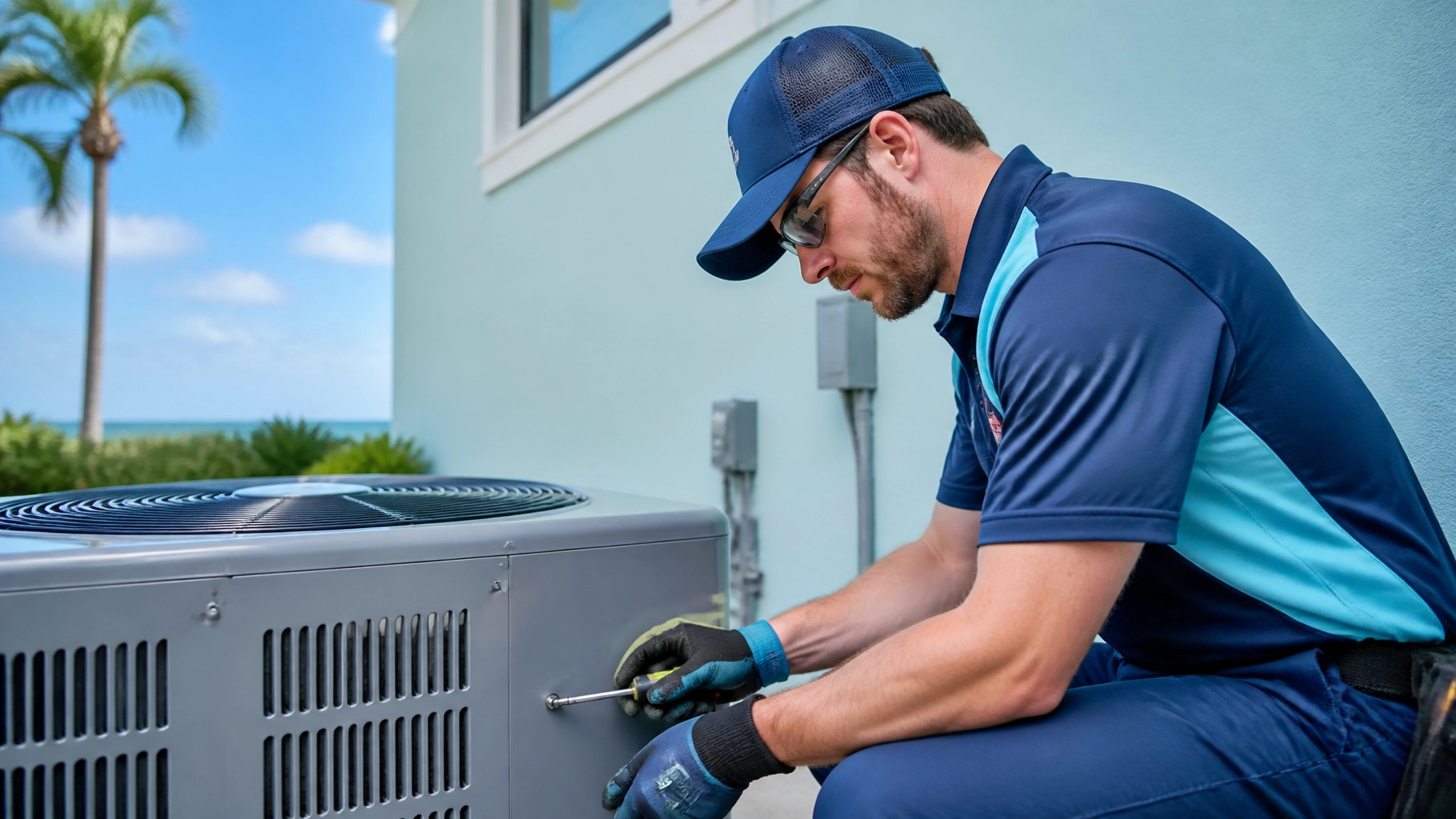
Living in Florida means your air conditioner isn't just a luxury; it’s a vital piece of survival gear. Whether you’re a homeowner trying to escape the July humidity, a realtor closing a deal, or a property manager keeping tenants happy, getting your ac installation florida right is non-negotiable.
But here’s the thing: Florida is famous for more than just its beaches. It’s known for some of the strictest building codes and permitting requirements in the country. If you skip a step, you could face heavy fines, insurance denials, or a system that fails when you need it most. At Florida HVAC Specialists, we’ve resolved over 12,000 issues across the state, so we know exactly what it takes to stay cool and compliant.
In this guide, we’ll break down everything you need to know about navigating the permit process, understanding the Florida Building Code, and ensuring your new system is installed for maximum efficiency.
Why AC Installation in Florida is a Different Beast
Florida’s climate is unique, and so are the demands on our HVAC systems. Between the salt air that corrodes coils and the 90% humidity that tests your system’s dehumidification capabilities, a "standard" installation doesn't exist here.
When you're looking for hvac maintenance florida or a full system replacement, you have to account for high-static pressure in ductwork and the proper SEER2 (Seasonal Energy Efficiency Ratio) ratings. As of 2023, federal and state regulations have upped the ante on efficiency, making it even more important to choose the right unit for our tropical environment.
The Legal Side: Why You Absolutely Need a Permit
One of the most common questions we get is, "Do I really need a permit for a simple change-out?" In Florida, the answer is almost always a resounding yes.
Under Florida Statute Chapter 489, any work that involves installing, removing, or replacing an AC system requires a mechanical permit issued by your local building department. This isn't just bureaucracy; it's a safety measure.
Common Myths About Permits
- "It’s just an exact replacement, so I don't need one." False. Even an "exact change-out" requires a permit to ensure the new unit meets current energy codes and is anchored correctly for hurricane winds.
- "Permits are just a way for the city to make money." While there are fees, the primary goal is the inspection. A third-party inspector verifies that the electrical work is safe and the unit won't become a projectile during a storm.
- "I can pull the permit myself as a homeowner." You can, but you become the "contractor of record," meaning you are personally liable for any code violations or injuries on the job site.

Decoding the Florida Building Code for HVAC
The Florida Building Code (Mechanical) is the rulebook we live by. It covers everything from how many screws go into a piece of ductwork to how the condensate drain lines must be angled.
For a successful ac installation florida, your contractor must provide:
- Manual J Calculations: This determines the exact cooling load of your home. A unit that is too small won't cool; a unit that is too big won't dehumidify, leading to mold issues.
- AHRI Certificate: This proves that the indoor and outdoor units are a matched set designed to work together efficiently.
- Hurricane Tie-Downs: Florida code requires outdoor units to be bolted to a concrete pad or stand that can withstand specific wind speeds.
New 2024 Electrical Requirements (HB 481)
Recent legislation, specifically Florida House Bill 481, has clarified rules regarding the electrical side of AC installs. The law emphasizes that a dedicated electrical disconnect must be present and properly sized for the unit's amperage. Importantly, it clarifies that while HVAC contractors can handle the "load side" of the disconnect, major "line side" upgrades (like a new circuit from your main panel) often require a licensed electrical contractor.
If you’re experiencing frequent electrical trips, you might need more than just a quick ac repair florida; you might need a full system assessment to ensure your wiring matches your cooling needs.
Steps for a Successful AC Installation in Florida
If you’re planning a replacement, here is the professional workflow we follow to ensure everything is done right the first time:
- Site Assessment: We check your existing ductwork repair needs and insulation levels.
- Permit Submission: We handle the paperwork with your local county or city building department.
- The Install: This includes removing the old refrigerant (properly captured, never vented!), installing the new air handler and condenser, and updating the thermostat.
- Testing: We check for refrigerant leak repair issues immediately and verify airflow across all vents.
- The Inspection: We coordinate with the municipal inspector to "close out" the permit.

Managing Your AC Replacement Cost in Florida
Let's talk numbers. The ac replacement cost florida can vary wildly based on the size of your home and the efficiency of the unit. While a budget-friendly 14.3 SEER2 unit might save you money upfront, a high-efficiency heat pump installation florida can save you thousands in utility bills over the next decade.
Keep in mind that Florida’s "brutal climate" means systems generally last 10–12 years. If your unit is older than that, frequent calls for "air conditioning repair near me" are likely just delaying the inevitable. Investing in a new, permitted installation often pays for itself through reduced repair costs and lower monthly bills.
Why Professional Installation Beats DIY Every Time
We’ve seen it all: units installed backward, refrigerant lines kinked, and thermostats wired in ways that could start a fire. Beyond the safety risks, an unpermitted or DIY installation can lead to:
- Voided Warranties: Most manufacturers (like Carrier, Trane, or Rheem) require professional installation to honor their 10-year parts warranty.
- Home Sale Hurdles: When you sell your home, the buyer’s home inspector will look for "closed" permits. If they don't find one for your AC, it can kill the deal.
- Insurance Issues: If an unpermitted unit causes water damage or a fire, your insurance company might deny the claim.
At Florida HVAC Specialists, we prioritize clear communication and code compliance. We don't just "drop in" a unit; we ensure your entire system: from the thermostat to the ductwork: is optimized for Florida living.

Frequently Asked Questions (FAQ)
How long does a typical AC installation take in Florida?
For most residential homes, a standard change-out takes between 4 to 8 hours. However, the permit approval process can take anywhere from a few days to two weeks, depending on your local building department.
Do I need a permit for emergency ac repair?
Simple repairs like replacing a capacitor or a fan motor do not require a permit. However, if the repair involves replacing a major component like the compressor or the entire outdoor coil, a permit may be triggered depending on local regulations.
What is the best SEER2 rating for Florida homes?
While the minimum is 14.3 SEER2, we often recommend 16 to 18 SEER2 for Florida homeowners. The higher efficiency helps significantly with dehumidification, which is the biggest challenge in our state.
Is a heat pump better than a straight-cool AC in Florida?
Heat pumps are incredibly efficient and are becoming the standard in Florida. They provide excellent cooling and efficient heating during those few chilly winter weeks.
Conclusion
Getting a new AC shouldn't be a headache. By understanding the importance of ac installation florida regulations and hiring a licensed professional, you can ensure your home stays a sanctuary against the heat.
Florida HVAC Specialists is here to help you stay comfortable and compliant. Whether you need a residential replacement or a large-scale commercial installation, our team is ready with 24-hour response times and statewide coverage.
Ready to upgrade your comfort? Contact Florida HVAC Specialists today for a reliable, code-compliant installation that gets the job done right the first time.
Disclaimer: HVAC requirements and permits vary by Florida jurisdiction. Always consult your local authorities or a licensed Florida HVAC professional like Florida HVAC Specialists for specific guidance in your area.