



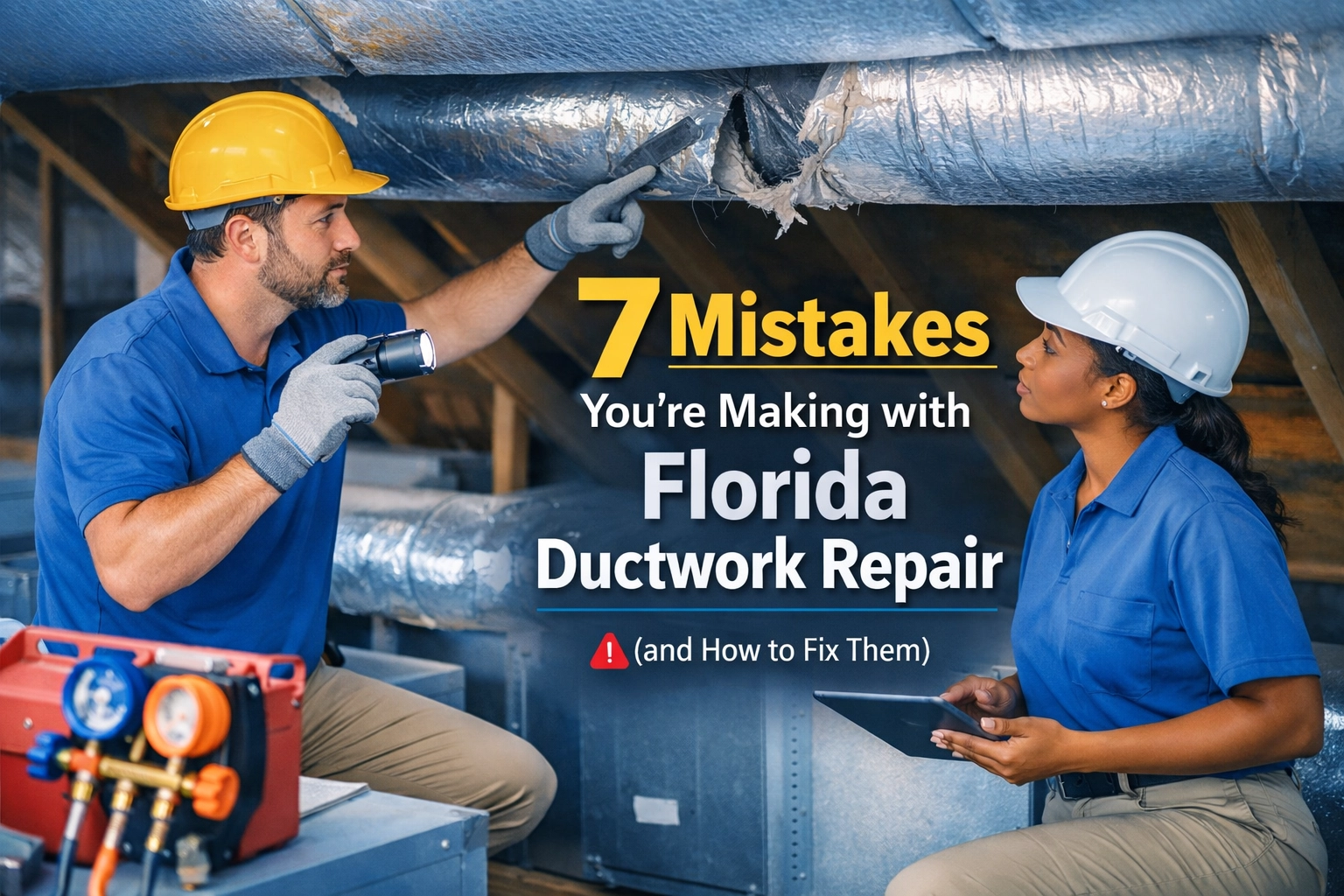
Living in Florida means your air conditioning system isn't just a luxury; it’s a survival tool. While most homeowners focus on the outdoor condenser or the indoor air handler, the ductwork: the "circulatory system" of your home: often goes ignored. When things go wrong, a quick "ductwork repair" seems like an easy Saturday afternoon project. However, the unique Florida climate, characterized by extreme humidity and attic temperatures that can exceed 130°F, makes duct repair a high-stakes task.
If your ducts aren't performing correctly, you're likely overpaying for electricity and putting unnecessary strain on your HVAC system. At Florida HVAC Specialists, we see the same errors repeated across the state. Whether you’re looking for ac repair florida or considering a full system overhaul, avoiding these seven common mistakes will save you money and keep your home significantly cooler.
1. Using the Wrong Materials to Seal Leaks
The most common mistake is right in the name: using "duct tape" to fix ductwork. Despite its name, standard silver adhesive tape is one of the worst materials for long-term hvac repair florida. The adhesive on standard tape dries out and becomes brittle under the intense heat of a Florida attic. Within months, the tape peels off, and your cool air is once again leaking into your crawlspace.
The Fix:
Professional-grade repairs require UL-listed foil tape or, better yet, mastic sealant. Mastic is a thick, gooey substance that is applied with a brush. Once it dries, it remains flexible, allowing it to expand and contract with the metal or flex-duct as temperatures change. For homeowners in Broward County or Duval County, ensuring your technician uses mastic is the gold standard for a permanent seal.

2. Skipping a Full-System Inspection
When a homeowner notices one room is warmer than the others, they often focus solely on the vent in that specific room. They might find a small tear, patch it, and call it a day. The mistake here is assuming that one visible leak is the only problem. Florida homes often feature complex duct networks hidden in wall cavities, deep attics, and behind insulation.
The Fix:
A comprehensive inspection is mandatory. This includes checking the "plenum" (the box that connects to your unit), branch connections, and the return air ducts. Often, a "refrigerant leak repair" or an emergency ac repair call actually reveals that the system is struggling because of massive, hidden disconnects in the return ducts that are sucking in hot, humid attic air. Always perform a total system pressure test or a visual inspection of every accessible foot of ducting.
3. Ignoring Clogged or Dirty Returns
Many people think ductwork repair is strictly about fixing holes. However, a "broken" duct system is often just a "blocked" one. In Florida, dust, pet hair, and even insulation fibers can accumulate in the return ducts. When the return is restricted, your AC unit has to work twice as hard to pull air in, which can lead to a frozen evaporator coil or a dead compressor.
The Fix:
Regular hvac maintenance florida should include an inspection of your return air pathways. If your filters are constantly gray and heavy, or if you notice a whistling sound near your intake, your ducts likely need a professional cleaning or a reconfiguration to allow for better airflow. Maintaining clean ducts is the best way to avoid the high ac replacement cost florida residents face when their systems burn out prematurely.
4. Incorrectly Sizing the Ductwork
If you’ve recently upgraded your AC unit, you might find that your old ducts can’t handle the new airflow. A common mistake is "bottlenecking": attaching a high-powered 5-ton unit to a duct system designed for a 3-ton unit. This creates high static pressure, making the system loud and inefficient. Conversely, oversized ducts cause the air to move too slowly, failing to dehumidify the home properly.
The Fix:
Before any major repair or ac installation florida, a professional should perform a Manual D load calculation. This ensures the duct diameter matches the cubic feet per minute (CFM) requirements of your HVAC unit. Proper sizing ensures that every room receives the same amount of cooling, eliminating those frustrating "hot spots" common in older Florida homes.

5. Attempting High-Stakes DIY Repairs
We all love a good DIY project, but ductwork in the Sunshine State is a different beast. DIYers often overlook "negative pressure" issues. If you seal a supply leak but leave a return leak open, you can actually create a vacuum that pulls exhaust gases (like carbon monoxide from a gas water heater) into your living space. Furthermore, crawling through a 130-degree attic in July is a safety hazard for anyone without professional training and equipment.
The Fix:
While you can certainly change your own filters, complex repairs should be left to a licensed contractor. When you search for air conditioning repair near me, look for specialists who understand the Florida Building Code. Professionals have specialized tools, such as thermal imaging cameras and duct blasters, to find leaks that are invisible to the naked eye. This ensures the job is done right the first time, protecting both your comfort and your warranty.
6. Neglecting Duct Insulation
In Florida, your ducts aren't just paths for air; they are cold pipes sitting in a very hot room (your attic). If the insulation around your ducts is thin, torn, or water-damaged, the cold air inside the duct will warm up before it ever reaches your vents. Even worse, cold ducts in a humid attic will "sweat." This condensation can lead to mold growth and wood rot in your ceiling.
The Fix:
Ensure your ducts have a high R-value insulation (typically R-6 or R-8 in Florida). If you notice "sweating" or water spots on your ceiling, don't just patch the drywall. You need to repair or replace the duct insulation immediately. This is especially vital for heat pump installation florida projects, as heat pumps rely on maintaining precise temperatures to remain energy efficient.

7. Using Aggressive Cleaning Methods on Flex-Ducts
Most modern Florida homes use "flex-duct": a flexible plastic liner supported by a wire coil and surrounded by insulation. A common mistake is hiring a "budget" duct cleaner who uses aggressive rotating metal brushes. These brushes can easily shred the thin inner lining of flex-ducts, turning a simple cleaning into a multi-thousand-dollar replacement job.
The Fix:
If you have flex-ducts, only use "soft" cleaning methods, such as high-velocity air sweeps or soft-bristled brushes designed specifically for flexible materials. If your ducts are more than 15 years old, the plastic lining may be too brittle for any cleaning. In these cases, replacement is often more cost-effective than repair, especially when considering the energy savings of a modern, sealed system.
The Florida Factor: Compliance and Codes
It’s important to remember that HVAC requirements and permits vary by Florida jurisdiction. For example, some counties require a permit and a duct leakage test (often called a "Duct Blaster" test) whenever more than a certain percentage of the ductwork is replaced.
Working with a company like Florida HVAC Specialists ensures that your repairs are not only effective but also fully compliant with local building codes in areas like Alachua County or Brevard County. We prioritize safety, efficiency, and long-term reliability.
Summary Checklist for Ductwork Health:
- Check the Seal: Look for mastic or foil tape, not silver duct tape.
- Insulation Check: Ensure no metal is exposed or "sweating."
- Airflow Check: Are vents blowing weakly? You might have a disconnected branch.
- Filter Check: If filters get dirty in two weeks, your return ducts might be leaking in attic dust.
Stay Cool and Compliant
Ductwork repair isn't just about patching holes; it’s about optimizing the environment you live in. In a state where humidity is the enemy, your ducts are your primary defense. Routine HVAC maintenance with a licensed Florida HVAC contractor can improve performance and reduce energy costs by up to 30%.
Don't let a simple air leak turn into an expensive system failure. Whether you need an inspection in Orange County or an emergency repair in the Panhandle, Florida HVAC Specialists can help you stay comfortable and compliant with local codes year-round.
Disclaimer: HVAC requirements and permits vary by Florida jurisdiction. Always consult your local authorities or a licensed Florida HVAC professional before undertaking significant repairs or installations.