



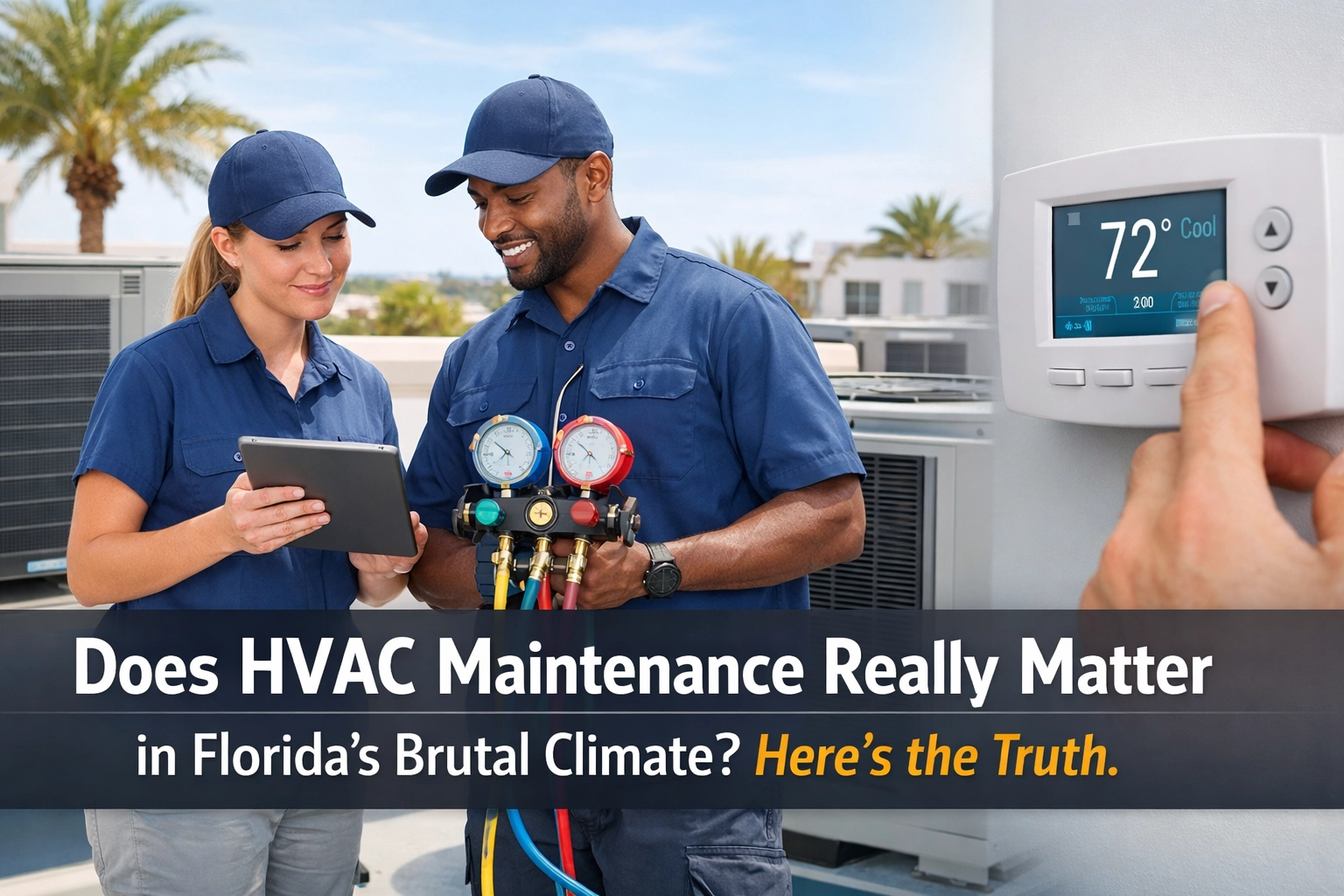
Let's get straight to it: if you live in Florida and think HVAC maintenance is optional, you're setting yourself up for expensive problems. Your air conditioning system doesn't just keep you comfortable: it runs nearly year-round in Florida's heat and humidity, working harder than systems in most other states. Skip maintenance, and you're looking at reduced efficiency, sky-high energy bills, and a system that fails when you need it most.
This isn't about upselling services. It's about understanding how Florida's unique climate puts extreme stress on heating and cooling systems, and why proactive maintenance is the smartest financial decision you can make as a homeowner or property manager.
Why Florida's Climate Is Different (And Why That Matters)
Florida presents HVAC challenges that states with seasonal weather simply don't face. Your system runs nearly 365 days a year. The combination of relentless heat, oppressive humidity, and: for coastal properties: corrosive salt air creates the perfect storm for accelerated wear and tear.
High humidity forces your system to work overtime. While air conditioning in Arizona focuses primarily on temperature control, Florida systems must continuously remove moisture from the air. This extended runtime increases energy consumption and puts constant strain on components like compressors, fans, and evaporator coils.
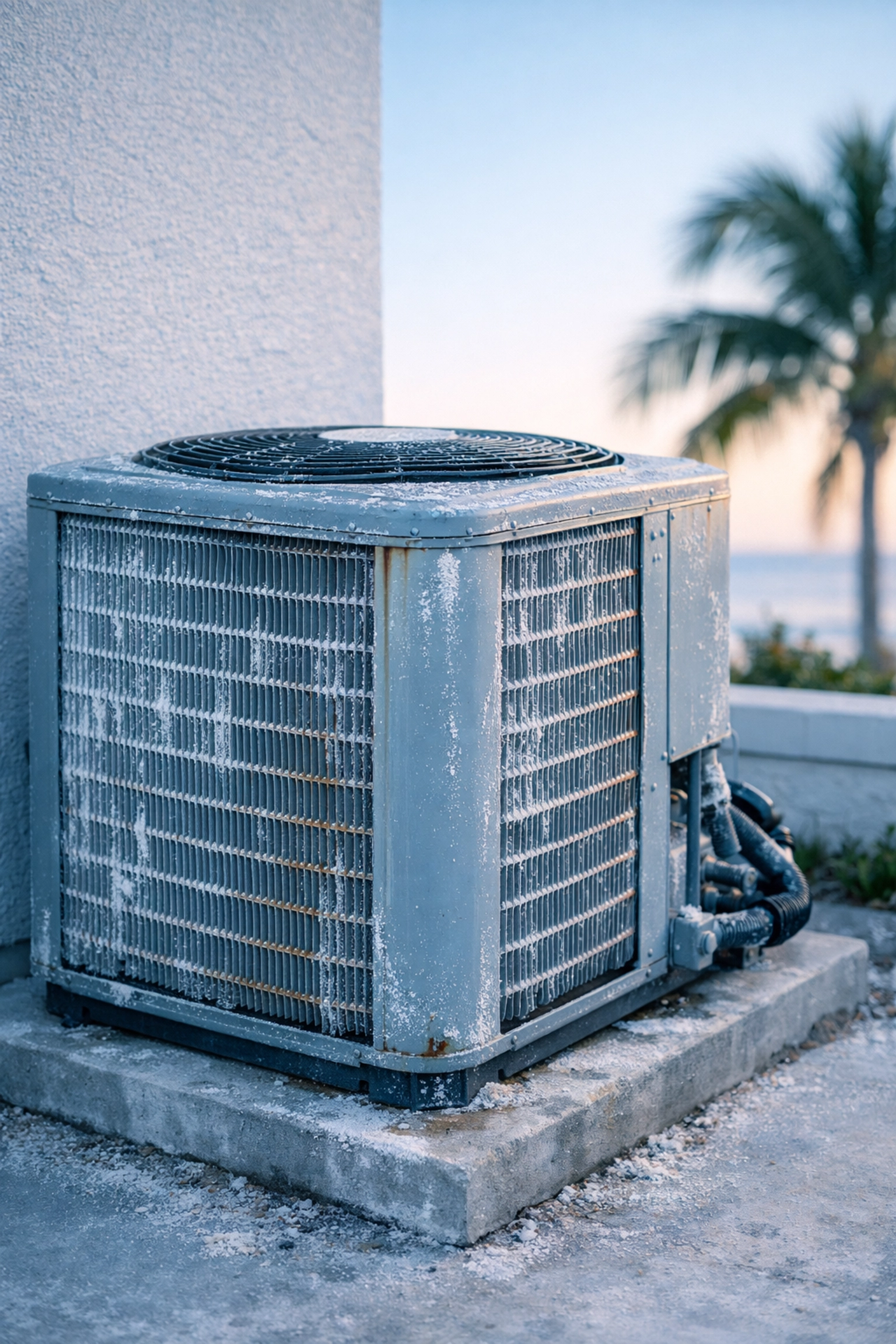
Salt air accelerates corrosion. If you're within a few miles of the coast, microscopic salt particles infiltrate your outdoor unit. These particles settle on metal surfaces, coils, and electrical connections, causing corrosion that can cut your system's lifespan in half. A well-maintained system can last 15 to 20 years in Florida, but a neglected coastal unit might only survive 7 to 10 years.
Year-round operation means no breaks. Northern states give HVAC systems months of rest between cooling and heating seasons. In Florida, your AC runs through summer, fall, and most of winter. Components never get downtime to recover, which is why regular HVAC maintenance in Florida isn't just recommended: it's essential for system survival.
What Actually Happens When You Skip Maintenance
When you postpone or skip maintenance appointments, specific problems develop in a predictable sequence. Understanding this progression shows why prevention costs less than repair.
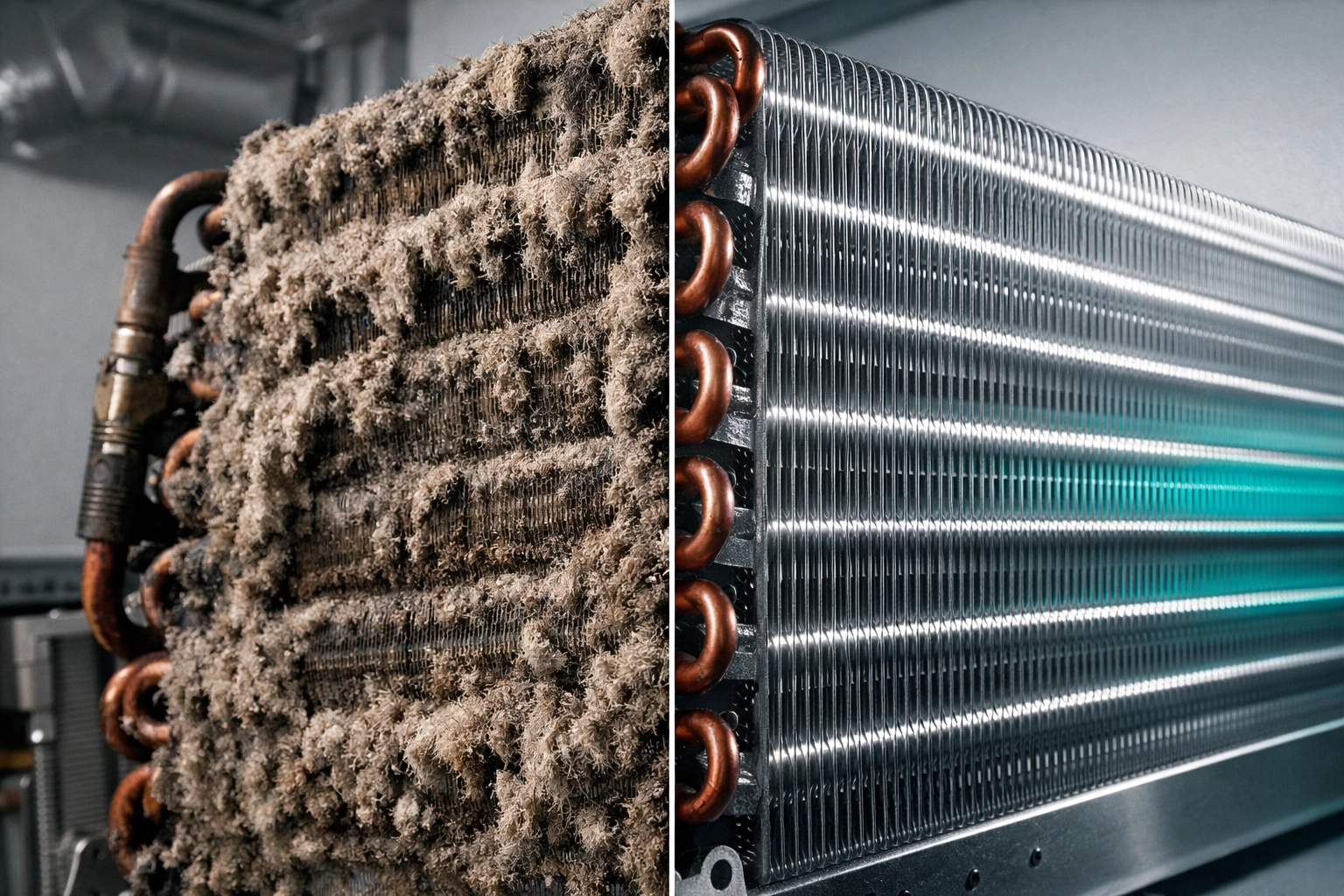
Airflow restriction happens first. Dust, pollen, and debris accumulate on coils and in ductwork. Your system compensates by running longer cycles to achieve the same cooling effect. You'll notice rooms that don't cool evenly and an AC that never seems to shut off. Energy bills climb 15 to 25 percent before most homeowners realize something's wrong.
Refrigerant leaks develop silently. Corrosion and vibration create microscopic leaks in refrigerant lines. These leaks reduce cooling capacity gradually, so you might not notice until the system stops cooling entirely. Refrigerant leak repair requires specialized detection equipment and EPA-certified technicians: and it's significantly more expensive than catching corrosion early during routine maintenance.
Electrical connections deteriorate. Florida's humidity causes oxidation on electrical contacts and connections. Loose or corroded connections create resistance, generate heat, and can ultimately damage compressors or fan motors. These are among the most expensive components to replace.
Drain lines clog completely. Your AC removes gallons of moisture from your home daily. This water drains through condensate lines that, without regular cleaning, become breeding grounds for algae and mold. Blocked drain lines cause water damage, mold growth, and automatic system shutoffs: often at the worst possible time.
The Real Cost of Neglecting HVAC Maintenance in Florida
The financial difference between maintained and neglected systems is substantial and measurable.
Energy costs increase immediately. A dirty system consumes 20 to 30 percent more electricity than a clean one. For a typical Florida home spending $200 monthly on cooling, that's $40 to $60 wasted every month: $480 to $720 annually.
Repair frequency multiplies. Homeowners who skip maintenance average 2 to 3 emergency repair calls during their system's lifetime compared to well-maintained systems that might need one unscheduled repair or none at all. Emergency AC repair calls during Florida summers often come with premium pricing due to high demand.
Replacement happens years earlier. A maintained system reaches 15 to 20 years of service life. A neglected system fails at 7 to 12 years. The difference represents thousands in premature AC replacement costs in Florida, where quality system installation runs $5,000 to $12,000 depending on home size and efficiency requirements.
Warranty coverage disappears. Most manufacturers require proof of annual professional maintenance to honor warranty claims. Skip maintenance, and you might discover your "covered" compressor failure actually costs you full replacement price because you didn't maintain documentation.
What Professional HVAC Maintenance Actually Includes
Professional maintenance goes far beyond changing filters. Licensed technicians perform comprehensive inspections and preventive services designed specifically for Florida's climate challenges.
Refrigerant level verification. Technicians measure refrigerant charge precisely. Too little reduces cooling capacity. Too much damages the compressor. Proper charge ensures optimal efficiency and prevents expensive component failures.
Coil cleaning and inspection. Both evaporator and condenser coils accumulate buildup that insulates them from proper heat transfer. Professional cleaning restores efficiency. Technicians also inspect for corrosion: especially critical in coastal areas: and can apply corrosion inhibitors to extend equipment life.
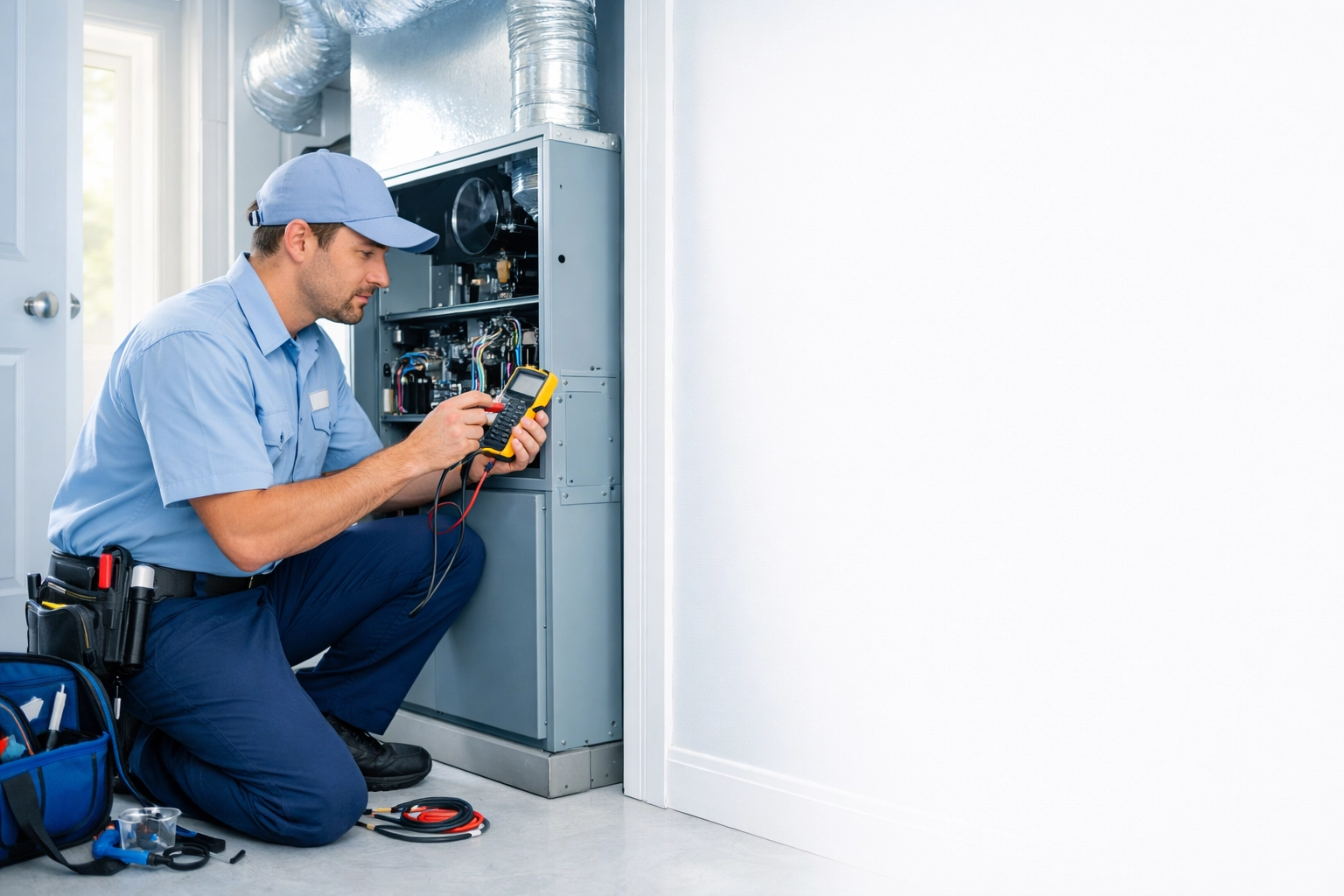
Electrical connection testing. Every electrical connection gets inspected for tightness, corrosion, and proper voltage. This prevents the heat buildup that damages motors and compressors.
Condensate drain cleaning. Technicians clear drain lines, add algaecide tablets, and verify proper drainage. This prevents water damage and maintains the dehumidification your Florida home requires.
Airflow measurement. Proper airflow is critical for efficiency and comfort. Technicians verify that ductwork delivers the correct air volume to each room and identify any ductwork repair needs before they become major problems.
Safety controls verification. Modern HVAC systems include multiple safety controls. Testing these ensures your system shuts down properly if problems develop, preventing catastrophic failures.
How Often Should You Schedule Maintenance in Florida?
The standard recommendation nationwide is annual maintenance. Florida requires more.
Bi-annual service is the Florida standard. Schedule one appointment in early spring (March or April) before peak cooling season begins, and another in late fall (October or November) before occasional heating needs arise. This twice-yearly schedule catches problems before they become emergencies during the seasons when you need your system most.
Coastal properties need extra attention. If you're within 3 miles of the coast, consider quarterly inspections of your outdoor unit. Salt air accelerates corrosion rapidly enough that additional monitoring provides meaningful protection against premature failure.
Commercial properties follow stricter schedules. Commercial HVAC systems run continuously and serve multiple occupants. Most commercial maintenance agreements include quarterly service visits minimum, with some high-demand facilities requiring monthly inspections.
New systems need baseline service. Even brand-new installations should receive a professional inspection 3 months after installation. This catches any installation issues while they're still under warranty and establishes baseline performance metrics.
Signs Your System Needs Attention Now
Between scheduled maintenance visits, watch for these warning signs that indicate immediate professional attention is needed:
- Weak airflow from vents suggests ductwork problems, failing blower motors, or severely restricted filters
- Warm air from supply vents indicates refrigerant issues, compressor problems, or thermostat failures
- Moisture or water near the indoor unit means clogged drain lines or, worse, refrigerant leaks
- Unusual sounds like grinding, squealing, or banging point to failing bearings, loose components, or debris in the blower
- Frequent cycling (system turning on and off repeatedly) signals thermostat issues, refrigerant problems, or electrical failures
- Unexplained energy bill increases of 20 percent or more indicate efficiency losses from dirty coils, refrigerant leaks, or failing components
Don't wait until complete system failure. These warning signs give you the opportunity to address problems before they become emergencies requiring overnight shipping of parts or complete system replacement.
The Bottom Line on Florida HVAC Maintenance
Florida's climate doesn't give your HVAC system any breaks, and you shouldn't skip maintenance hoping to save money. The math is clear: spending $150 to $300 twice yearly on professional maintenance prevents thousands in premature replacement costs, reduces monthly energy bills by 20 to 30 percent, and ensures your system works when you need it most.
Regular maintenance extends system life, maintains manufacturer warranties, improves indoor air quality, and catches small problems before they become expensive emergencies. In Florida's year-round heat and humidity, maintenance isn't optional maintenance: it's the most cost-effective decision you can make for your home comfort and your wallet.
Florida HVAC Specialists provides comprehensive maintenance services throughout the state, with same-day scheduling and 24-hour emergency response when you need it. Our licensed technicians understand Florida's unique climate challenges and deliver the thorough, code-compliant service your system needs to survive and thrive in the Sunshine State.