



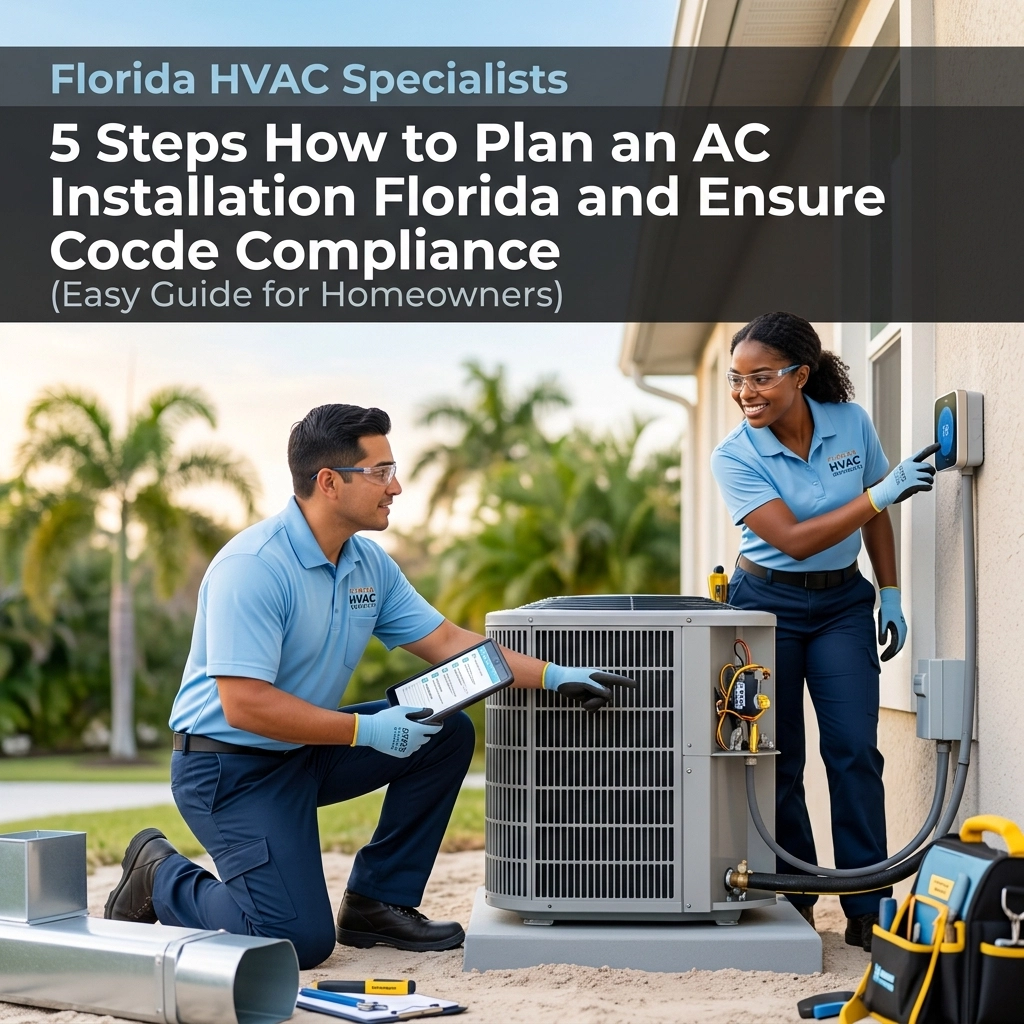
Living in Florida means your air conditioning system isn't just a luxury, it’s a vital piece of equipment that protects your home from mold, humidity, and sweltering temperatures. When it comes time for a new unit, many homeowners feel overwhelmed by the technical jargon and the strict regulatory environment unique to the Sunshine State. Planning an ac installation Florida project requires more than just picking a brand; it involves navigating building codes, ensuring energy efficiency, and securing the right permits to protect your investment.
In this guide, we’ll walk you through the five essential steps to ensure your new system is sized correctly, installed legally, and performs efficiently for years to come. Whether you are in Alachua County or Brevard County, following these steps will help you avoid common pitfalls and ensure your home stays cool and compliant.
Step 1: The Professional Load Calculation (Manual J Assessment)
The most common mistake Florida homeowners make is assuming that "bigger is better" when it comes to air conditioning. In our humid climate, an oversized unit will cool the air too quickly without removing enough moisture, leaving your home feeling clammy and inviting mold growth. Conversely, an undersized unit will run constantly, driving up your energy bills and leading to premature failure.
Before you look at prices, you need a Manual J Load Calculation. This isn't a "rule of thumb" based on square footage. A professional assessment looks at:
- The orientation of your home (which rooms get the afternoon sun).
- The type and quality of insulation in your attic and walls.
- The number and efficiency of your windows.
- Local climate data for your specific Florida region.
By getting this right, you ensure your ac installation Florida project starts on a solid foundation. This calculation is often a prerequisite for meeting the Florida Energy Code, so don't let a contractor skip it.

Step 2: Navigating Florida’s Permits and Energy Standards
Florida has some of the strictest building codes in the nation, and for good reason. Our systems face extreme heat and hurricane-force winds. To ensure safety and efficiency, you must comply with several regulatory layers.
The Importance of Permits
According to Florida Statute Chapter 489, a building permit is required for any HVAC installation or replacement. This isn't just a bureaucratic hurdle; it’s your protection. A permit triggers a third-party inspection from the local municipality to ensure the electrical work is safe and the unit is secured properly. If you ever sell your home, a lack of permits for major upgrades like an AC system can stall the closing or lead to heavy fines.
Meeting SEER2 Requirements
As of 2023, the Department of Energy updated the efficiency standards. In Florida, new split-system air conditioners must meet a minimum rating of 14.3 SEER2 (which corresponds to the old 15 SEER rating). High-efficiency units may cost more upfront, but they significantly lower your monthly cooling costs. You can learn more about how efficiency impacts your long-term savings in our guide to ac replacement cost Florida.
Ductwork and HERS Testing
Florida code also addresses the efficiency of your delivery system. If you are replacing your unit, the technician should inspect your ductwork. In many jurisdictions, if more than a certain percentage of the ductwork is replaced, it must undergo a Duct Leakage Test (often part of a HERS rating) to ensure air isn't escaping into your attic or crawlspace.
Step 3: Selecting a Licensed Florida HVAC Specialist
In Florida, the HVAC industry is highly regulated. You should only ever hire a contractor who holds a valid license from the Florida Department of Business and Professional Regulation (DBPR).
When vetting contractors, look for:
- State Certification: Look for "CAC" (Class A Air Conditioning) or "CMC" (Mechanical) license numbers.
- Local Experience: A contractor familiar with the specific salt-air challenges of coastal counties like Bay County or Brevard County will know how to recommend units with corrosion-resistant coatings.
- Proof of Insurance: Ensure they carry both general liability and workers' compensation to protect you from liability during the install.
Working with a reputable professional is the best way to find reliable ac repair in Florida and ensure your new installation doesn't void the manufacturer’s warranty.

Step 4: Preparing Your Home for Installation Day
Once you’ve selected your system and contractor, and the permits are in hand, it’s time for the actual installation. Most residential AC replacements take between 6 to 10 hours, though complex jobs involving ductwork may take longer.
To make the process go smoothly:
- Clear the Path: Ensure the technicians have a clear path to both the indoor air handler (usually in a closet, garage, or attic) and the outdoor condenser unit.
- Secure Pets and Kids: The technicians will be moving heavy equipment and working with high-voltage electricity and pressurized refrigerants. Keep pets and children in a separate area for their safety.
- Clear the Pad: If your outdoor unit is being replaced, make sure the surrounding vegetation is trimmed back. Florida code requires specific clearances around the unit for proper airflow and maintenance access.
- Electrical Access: Ensure your main electrical panel is accessible. The team will need to turn off breakers and potentially upgrade the whip or disconnect box to meet modern safety standards.
Step 5: Final Verification and Post-Install Testing
The job isn't done just because the air feels cold. To ensure full code compliance and peak performance, your contractor should perform a series of post-installation tests.
- Refrigerant Charge Verification: Using digital gauges to ensure the system has the exact amount of refrigerant specified by the manufacturer.
- Airflow Calibration: Adjusting the blower motor to ensure the correct Cubic Feet per Minute (CFM) of air is moving through your home.
- Condensate Drainage: Verifying that the primary and secondary drain lines are clear and that safety "float switches" are installed. In Florida, a clogged drain line is a leading cause of emergency repairs.
- The Municipal Inspection: Once the installation is complete, the city or county inspector must visit to "sign off" on the permit. This is the final step in ensuring your home is compliant with Florida law.
Disclaimer:
HVAC requirements and permits vary by Florida jurisdiction (such as specific requirements in Alachua, Baker, or Bay counties). Always consult your local building department or a licensed Florida HVAC professional before beginning work.
Frequently Asked Questions
Do I really need a permit for a simple AC change-out in Florida?
Yes. Florida law requires a permit for all AC replacements. This ensures the unit is installed safely, meets energy codes, and is properly strapped down to withstand high winds.
How long should a new AC system last in Florida?
Due to the intense heat and humidity (and salt air if you're near the coast), the average lifespan of a system in Florida is 10–12 years. Regular hvac maintenance Florida can help push that closer to 15 years.
Can I install my own AC unit to save money?
No. In Florida, it is illegal for an unlicensed individual to perform HVAC installations. Furthermore, manufacturers will void your warranty if the system is not installed by a licensed professional.

Staying Cool and Compliant
Planning an AC installation in Florida doesn't have to be a headache. By prioritizing a proper load calculation, ensuring all permits are pulled, and hiring a qualified specialist, you can rest easy knowing your home will stay cool even in the middle of August.
A high-quality installation is an investment in your home’s value and your family’s comfort. At Florida HVAC Specialists, we pride ourselves on helping homeowners across the state navigate these complex requirements with ease. Whether you're dealing with an unexpected breakdown or planning an upgrade to a high-efficiency heat pump, we are here to provide professional, code-compliant service.
If you’re ready to start your installation journey or need expert advice on the best system for your Florida home, reach out to a licensed professional today. Keeping your system in peak condition through routine hvac maintenance Florida is the best way to ensure your new investment pays off for years to come.
Ready to upgrade? Florida HVAC Specialists can help you stay comfortable and compliant with local codes year-round. Contact us today for an expert consultation.