



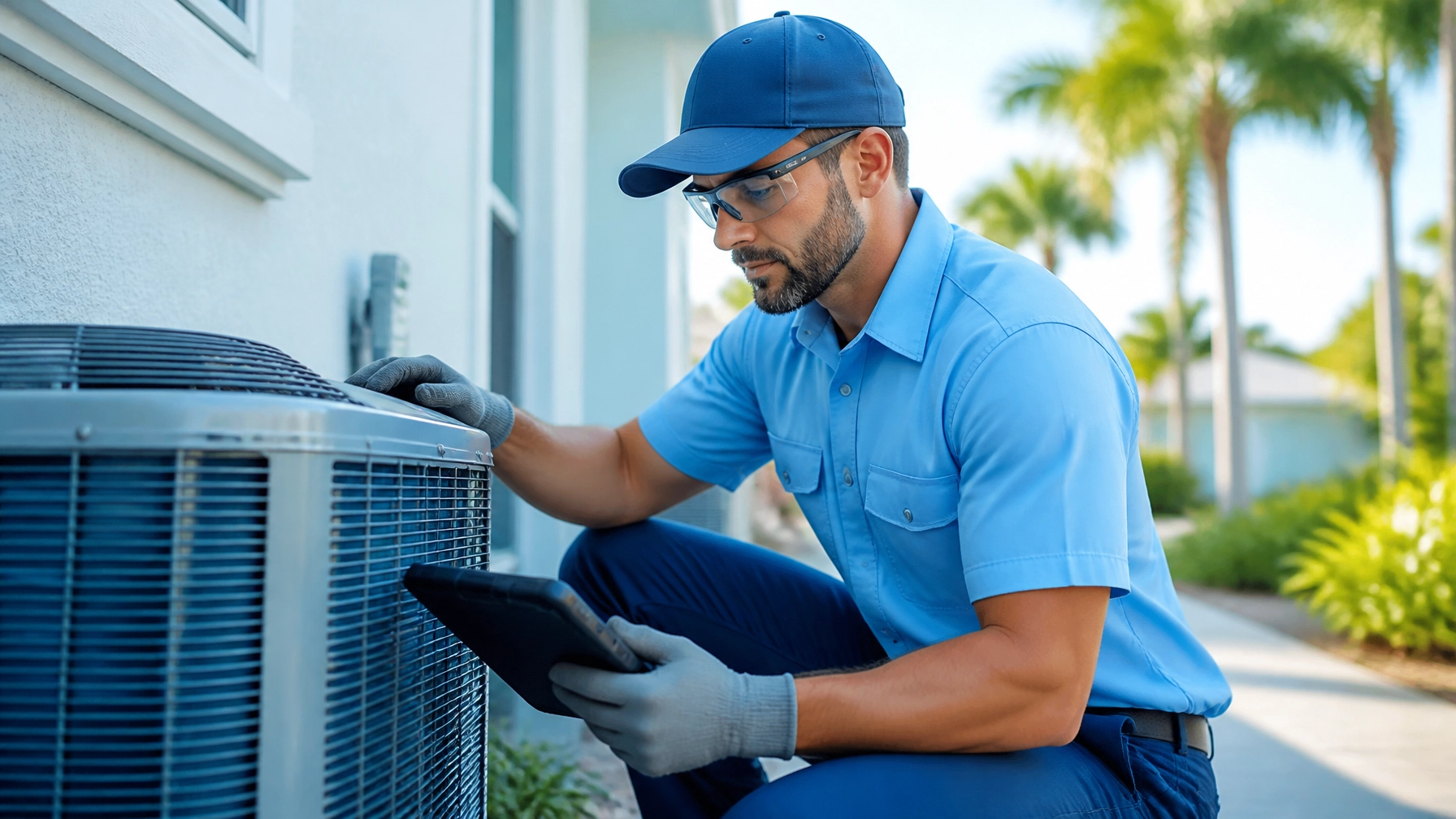
When the Florida heat kicks in and your AC stops blowing cold air, your first instinct is probably to grab your phone and search for "air conditioning repair near me." Within seconds, you're flooded with hundreds of results, from large corporations to local handymen with a truck and a toolbox. But in the Sunshine State, choosing an HVAC contractor is about more than just who can get there the fastest; it’s about who is legally qualified to touch your system.
Florida has some of the strictest HVAC licensing requirements in the country, and for good reason. Our climate puts an incredible amount of stress on cooling systems, and improper work can lead to high energy bills, mold growth, or even electrical fires. Whether you need an emergency ac repair or a full heat pump installation florida project, knowing the ins and outs of state licensing is your best defense.
At Florida HVAC Specialists, we’ve resolved over 12,000 issues across the state, and we’ve seen exactly what happens when unlicensed work goes wrong. Here are 10 things you must know about Florida HVAC licensing before you hire your next technician.
1. The DBPR Oversees Everything
In Florida, all HVAC contractors are regulated by the Department of Business and Professional Regulation (DBPR). This state agency ensures that anyone performing hvac repair florida services has met specific education, experience, and financial stability requirements.
If a contractor cannot provide a license number starting with "CAC" (Certified Air Conditioning) or "RAC" (Registered Air Conditioning), they are likely operating illegally. Working with an unlicensed individual means you have no recourse through the state if the job is botched or left unfinished.
2. Certified vs. Registered: Know the Difference
There are two main types of licenses in Florida, and the difference matters for your project.
- State-Certified Contractors: These professionals have passed a rigorous state-level exam and can work anywhere in Florida. At Florida HVAC Specialists, our statewide coverage is possible because of our certified status.
- State-Registered Contractors: These contractors are limited to working in specific local jurisdictions (like a single county). If they move outside their registered area to perform an ac repair florida service, they are technically unlicensed in that new location.

3. Permitting is the Law, Not an Option
One of the most common red flags in the industry is a contractor who says, "You don't need a permit for this." According to the Florida Building Code, a permit is required for almost all HVAC work that involves more than a minor component swap.
This includes ac installation florida and even significant ductwork repair. A licensed contractor will always pull the necessary permits, which triggers a third-party inspection to ensure the work is safe and up to code. This is especially vital for realtors and property managers who need to ensure clear titles during a sale.
4. Licensing Equals Insurance Protection
A license isn't just a piece of paper; it's a guarantee that the contractor carries the required insurance. To maintain a license in Florida, a company must have general liability insurance and workers' compensation.
If an unlicensed handyman gets injured while performing a refrigerant leak repair at your home, you could be held liable for their medical bills. Licensed contractors protect your property and your wallet from these types of catastrophic risks.

5. EPA Certification for Refrigerant Handling
Beyond the state license, any technician performing hvac maintenance florida that involves handling refrigerants must have an EPA 608 Certification. Florida is very protective of its environment, and the improper handling or venting of refrigerants is a federal offense.
Licensed professionals are trained to identify and fix leaks properly rather than just "topping off" a system, which is a temporary fix that often leads to more expensive refrigerant leak repair needs down the road.
6. Keeping Your Manufacturer’s Warranty Valid
Modern HVAC units from brands like Carrier, Trane, or Rheem come with extensive warranties, sometimes lasting up to 10 years. However, these warranties almost always contain a "licensed professional" clause.
If you hire an unlicensed individual for an ac replacement cost florida calculation and they perform the install, the manufacturer may void your warranty. Using a licensed Florida HVAC Specialist ensures that if a part fails under warranty, the manufacturer will actually cover the cost.
7. Compliance with the Florida Building Code
Florida’s building codes are unique due to our high humidity and hurricane risks. For example, outdoor units must be properly secured to concrete pads to prevent them from becoming projectiles during a storm.
Licensed contractors are experts in these specific regulations. Whether we are working on hvac services in Broward County or handling a project in Duval County, we ensure every installation meets the high-velocity hurricane zone requirements when applicable.

8. Financial Responsibility and Liens
Did you know that in Florida, if a contractor fails to pay their equipment supplier, that supplier can place a lien on your home? This is known as a Mechanic's Lien.
Licensed contractors must demonstrate financial responsibility to the DBPR. By hiring a reputable, licensed company for your ac installation florida, you are significantly reducing the risk of legal headaches involving unpaid suppliers or subcontractors.
9. Understanding Class A vs. Class B Licenses
If you are a commercial property manager looking for hvac repair florida, you need to know about license classes.
- Class A: Can work on any size unit (unlimited tonnage).
- Class B: Limited to units of 25 tons of cooling and 500,000 BTUs of heating or less.
While a Class B license is usually sufficient for residential homes, large commercial facilities require the expertise of a Class A contractor. Always verify that your contractor's license class matches the scale of your building's needs.
10. How to Verify a License in Seconds
Don't just take a contractor's word for it. You can verify any license in seconds by visiting the DBPR’s Verify a License portal. Search by company name or license number.
If the status says anything other than "Current/Active," keep looking. A truly professional company will have their license number clearly displayed on their website, their trucks, and their marketing materials.

Why Choose Florida HVAC Specialists?
When you're dealing with a broken AC in the middle of a Florida summer, you don't have time to worry about whether your technician is qualified. You need an emergency ac repair that is done right the first time.
At Florida HVAC Specialists, we take the guesswork out of the equation. We are a fully licensed and insured HVAC company serving residential and commercial clients throughout Florida. From routine hvac maintenance florida to complex ductwork repair and high-efficiency heat pump installation florida, we bring 12,000+ issues of experience to your doorstep.
Why we're the preferred choice for Florida homeowners and realtors:
- Statewide Coverage: Licensed to pull permits and perform work anywhere in Florida.
- 24-Hour Response: Because AC emergencies don't happen on a 9-to-5 schedule.
- Permit Experts: We ensure every job is code-compliant and efficiency-optimized.
- Clear Communication: We provide transparent pricing, including detailed ac replacement cost florida estimates, so there are never any surprises.
Don't leave your comfort to chance. Whether you need a quick tune-up or a complete system overhaul, our team of licensed experts is ready to help.
Contact Florida HVAC Specialists today for reliable, professional service that keeps you cool when it matters most.
Disclaimer: HVAC requirements and permits vary by Florida jurisdiction. Always consult your local authorities or a licensed Florida HVAC professional.